Evidence Synthesis Ireland (ESI), which hosts Cochrane Ireland, aims to make evidence syntheses more usable in every sense of the word – better designed, conducted and reported, more useable for decision-makers and more usable within health care policy and clinical practice decision making across the island of Ireland and beyond.




We provide education for researchers, clinicians, the public and policymakers who conduct or use evidence syntheses.
We build capacity in planning, doing and sharing evidence syntheses through Fellowships, workshops and scholarships.
We advance the way we plan, do and share the results of evidence synthesis by finding out how to do these steps better.


To register, click here This workshop will be held over four mornings and provides authors, at the beginning of the systematic review process, with a clear
To register, click here
This workshop will be held over four mornings and provides authors, at the beginning of the systematic review process, with a clear understanding of how systematic reviews of the effects of interventions are planned and conducted. It offers an insight into the development of a protocol, introducing participants to methodology, search methods, data extraction, risk of bias assessment and meta-analysis. While the focus is on systematic reviews of the effects of interventions, the principles discussed are likely to be useful to inform steps and approaches in other types of reviews.
Date: 5th, 6th, 12th & 13th November 2026
Time: 10.00am – 1.00pm
Places: 25 available for individuals who are resident on the island of Ireland
Fee: General €150; Student €80
Skill level: Introductory
Target Audience: Healthcare professionals, academics, researchers, policy makers and other decision makers, and Evidence Synthesis Ireland fellows who have identified a systematic review of effects of interventions topic and are ready to begin working on their protocol.
Prerequisites: A basic knowledge of health research. Interested in learning more on the methods of a systematic review of effects of interventions.
Teaching strategies: The workshop will consist of a mixture of short presentations led by members of the Evidence Synthesis Ireland and Cochrane Ireland teaching faculty, covering each of the stages of developing a systematic review protocol, small group activities and plenary discussions, providing participants with the opportunity to develop and refine their protocol. Although focusing on systematic reviews of the effects of interventions, the principles are likely to apply to other review types. This course will include blended learning with two months free access to Cochrane Interactive Learning self-directed learning modules, a number of which will be required study prior to the workshop.
Facilitators
Ciara Gleeson, Clinical Specialist Physiotherapist, Respiratory Assessment Unit, St. James’s Hospital, Dublin
Dr KM Saif-Ur-Rahman, Evidence Synthesis Methods Lead, Evidence Synthesis Ireland & Senior Research Fellow, University of Galway
Dr Elayne Ahern, Associate Professor, Department of Psychology, University of Limerick
*If your type of ticket is sold out, please join the waitlist or contact us at esi@universityofgalway.ie
more
5 (Thursday) 10:00 am - 13 (Friday) 1:00 pm
ONLINE
To register, click here This is an introductory webinar to the Qualitative Evidence Synthesis (QES) methodology of Meta-ethnography. Meta-ethnography is an interpretive approach to QES and,
To register, click here
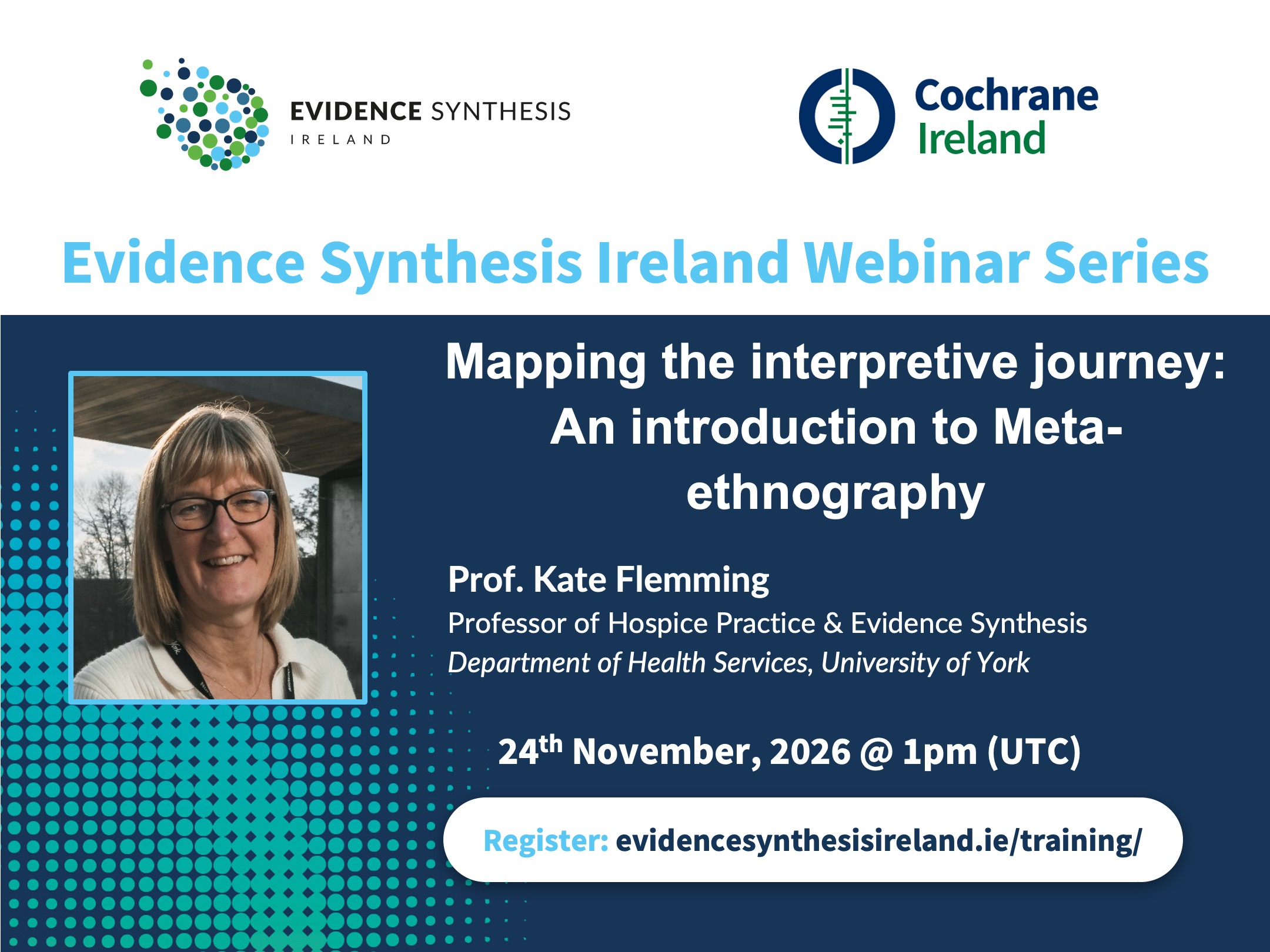
This is an introductory webinar to the Qualitative Evidence Synthesis (QES) methodology of Meta-ethnography. Meta-ethnography is an interpretive approach to QES and, unlike a standard systematic review that might aggregate data, meta-ethnography seeks to “translate” findings across studies to produce a new, higher-order understanding of a phenomenon. The webinar will begin by briefly exploring the role, purpose and development of QES, before moving onto examining what meta-ethnography is, the kind of questions it can answer and the processes associated with it. Drawing on work from a key public health issue -smoking in pregnancy – the webinar will demonstrate how meta-ethnography was able to unpick real-world complexity, providing richer, more actionable insights for health care decision-makers.
Speaker:
Prof. Kate Flemming is an experienced academic in nursing and palliative care and is Head of Department for the Department of Health Sciences at the University of York. Kate’s research focuses on evaluating patient and carer experience of palliative care. A key area is around equity of access to palliative care services, in particular people who are homeless or vulnerably housed. This work is closely integrated with her methodological expertise in qualitative evidence synthesis; she is a co-convenor of the Cochrane Qualitative and Implementation Methods Group.
more
(Tuesday) 1:00 pm - 2:00 pm
To register, click here Health care policy and practice decisions should be based on a synthesis of the global body of evidence rather than
To register, click here
Health care policy and practice decisions should be based on a synthesis of the global body of evidence rather than relying on individual studies. Cochrane Ireland and Evidence Synthesis Ireland promote evidence based healthcare policy and practice by supporting high quality, relevant systematic reviews and other synthesised research evidence. This workshop provides authors, actively involved in conducting a systematic review, with confidence to assess a wide range of data types. It offers an insight into more complex methods of meta-analysis.
Date: 26th & 27th November and 3rd & 4th December 2027
Time: 10.00 am – 1.00 pm
Places: 20 places available for individuals who are resident on the island of Ireland
Fee: €150 General & €80 Student
Target audience
Healthcare professionals, academics, researchers, decision makers and Evidence Synthesis Ireland fellows who are actively involved in performing a systematic review.
Prerequisites
Participants should at least have completed their review protocol, developed and conducted their search strategy and begun data extraction and analysis.
Learning outcomes
In this course participants will be enabled to:
Teaching strategies
This course consists of online workshops with of a mixture of short presentations, small group activities and practical demonstrations using Cochrane software (RevMan Web). In addition, participants will have access to Cochrane Interactive Learning modules and will be required to complete a set of modules prior to workshops. Access to the Cochrane Interactive Learning modules will be made available for 4 weeks before and 4 weeks after the workshop and will be free of charge thanks to the support of Cochrane Training.
Facilitators
Prof. Valerie Smith, Professor of Midwifery, University College Dublin
Dr Kerry Dwan, Senior Research Fellow, Centre for Reviews and Dissemination, University of York
*If your type of ticket is sold out, please join the waitlist or contact us at esi@universityofgalway.ie
more
November 26 (Thursday) 10:00 am - December 4 (Friday) 1:00 pm
ONLINE
To register, click here Health care policy and practice decisions should be based on a synthesis of the global body of evidence rather than
To register, click here
Health care policy and practice decisions should be based on a synthesis of the global body of evidence rather than relying on individual studies. Cochrane Ireland and Evidence Synthesis Ireland promote evidence based healthcare policy and practice by supporting high quality, relevant systematic reviews and other synthesised research evidence. This workshop provides authors, actively involved in conducting a systematic review, with confidence to assess a wide range of data types. It offers an insight into more complex methods of meta-analysis.
Date: 26th & 27th November and 3rd & 4th December 2027
Time: 10.00 am – 1.00 pm
Places: 20 places available for individuals who are resident on the island of Ireland
Fee: €150 General & €80 Student
Target audience
Healthcare professionals, academics, researchers, decision makers and Evidence Synthesis Ireland fellows who are actively involved in performing a systematic review.
Prerequisites
Participants should at least have completed their review protocol, developed and conducted their search strategy and begun data extraction and analysis.
Learning outcomes
In this course participants will be enabled to:
Teaching strategies
This course consists of online workshops with of a mixture of short presentations, small group activities and practical demonstrations using Cochrane software (RevMan Web). In addition, participants will have access to Cochrane Interactive Learning modules and will be required to complete a set of modules prior to workshops. Access to the Cochrane Interactive Learning modules will be made available for 4 weeks before and 4 weeks after the workshop and will be free of charge thanks to the support of Cochrane Training.
Facilitators
Prof. Valerie Smith, Professor of Midwifery, University College Dublin
Dr Kerry Dwan, Senior Research Fellow, Centre for Reviews and Dissemination, University of York
*If your type of ticket is sold out, please join the waitlist or contact us at esi@universityofgalway.ie
more
November 26 (Thursday) 10:00 am - December 4 (Friday) 1:00 pm
ONLINE
To register, click here This presentation will focus on sharing the results of a recently updated scoping review which has brought together publications describing patient and
To register, click here
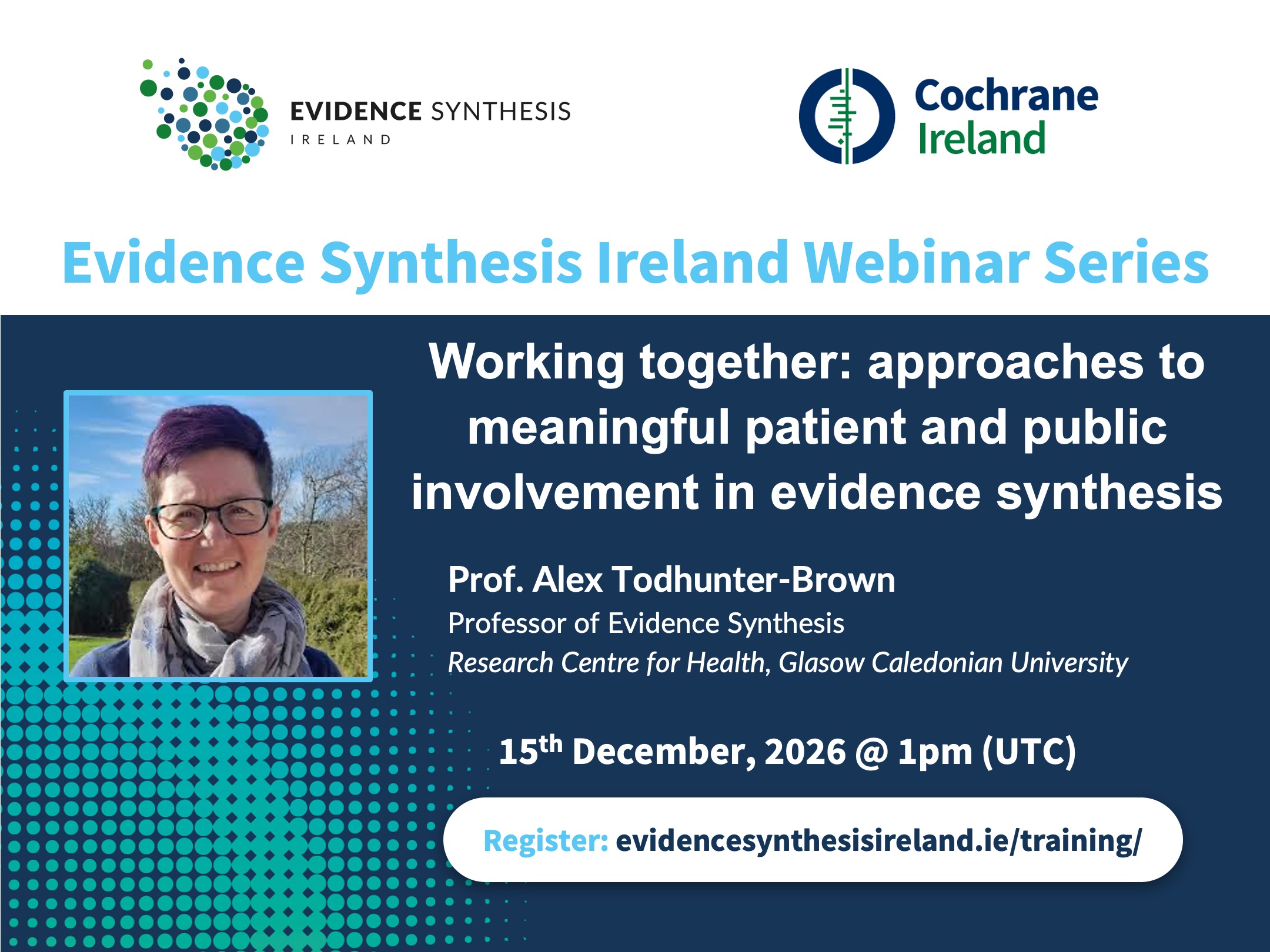
This presentation will focus on sharing the results of a recently updated scoping review which has brought together publications describing patient and public involvement in healthcare evidence syntheses1. Alex will describe the key findings using the ACTIVE Framework2, discussing (1) who was involved, (2) how these people were recruited, (3) what happened, (4) when it happened and (5) the extent of the involvement. These findings will show that people can be involved at all stages of an evidence synthesis, using a range of different approaches to involvement. The presentation will finish with an update on an ongoing project to develop guidance relating to involvement of interest-holders in evidence syntheses.
1 https://doi.org/10.1002/cesm.70066
2 https://doi.org/10.1177/1355819619841647
Speaker:
Prof. Alex Todhunter-Brown is Professor of Evidence Synthesis within the Research Centre for Health (ReaCH), School of Health and Life Sciences, Glasgow Caledonian University. Alex is internationally recognised for her conduct and methodological development of evidence syntheses across a diverse range of health and social care topics, including stroke. She is a key international leader in methods of involving patients and the public within evidence syntheses. Alex has over 110 publications, an h-index (Scopus) of 47, and is cited as being in the top 2% of scientists in her discipline. Alex is currently a member of the Chief Scientist Office Health Improvement, Protection and Services Research Committee.
more
(Tuesday) 1:00 pm - 2:00 am
To register, click here This webinar will address the new Planetary Health guidance from the GRADE Working Group (GRADE Guidance 46). The interconnection between human health
To register, click here
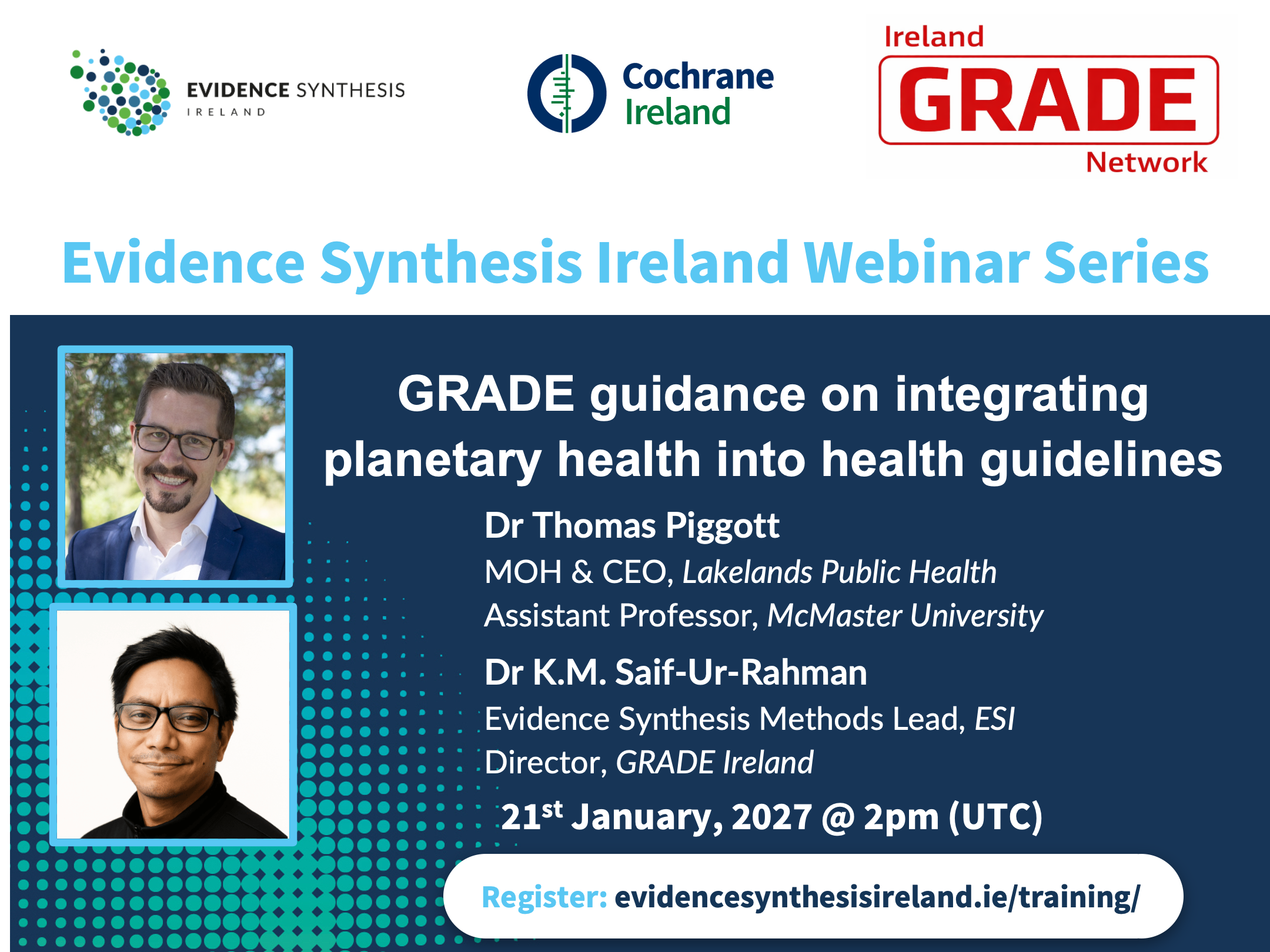
This webinar will address the new Planetary Health guidance from the GRADE Working Group (GRADE Guidance 46). The interconnection between human health and the environment has placed environmental and planetary health at the forefront of health policy decision making process. These planetary health boundaries are increasingly recognized as key determinants of health, influencing disease patterns, healthcare delivery, and population well-being. Health decision-makers face the dual challenge of mitigating their own environmental impact while adapting decision-making processes to consider planetary health impacts in health guidelines. This webinar aims to bring together leading voices from the guideline and systematic review world for a discussion on how to more effectively consider planetary health in these evidence synthesis products.
Speakers:
Dr. Thomas Piggott (pronouns he/him) is the Medical Officer of Health and CEO with Lakelands Public Health and an Assistant Professor at McMaster University. In his position as MOH/CEO, Dr. Piggott brings experience working at various levels of public health in Canada and internationally. Prior to Peterborough, Dr. Piggott worked as MOH and VP lead for Population/Rural & Remote Health in the northern region of Labrador and as a field doctor with Médecins Sans Frontières (Doctors Without Borders) in the Democratic Republic of the Congo. Dr. Piggott completed medical training, residency in Public Health and Preventive Medicine and his PhD in Health Research Methods at McMaster University. He is involved in research, teaching, clinical work and a father of young children with whom he loves spending time in nature.
Dr KM Saif-Ur-Rahman is an expert in evidence synthesis and health research methods. He is the Evidence Synthesis Methods Lead for Evidence Synthesis Ireland and Cochrane Ireland, Director of the Ireland GRADE Network, Senior Research Fellow at the Centre for Health Research Methodology, and Honorary Research Senior Lecturer in the College of Medicine, Nursing and Health Sciences at the University of Galway. Trained as a physician with a PhD in epidemiology from Nagoya University, he has worked on infectious and chronic diseases in resource-poor settings using mixed methods. He has published over 130 peer-reviewed papers and led numerous evidence synthesis, including Cochrane reviews. Saif has extensive experience in diverse evidence synthesis approaches, capacity-building training, trials, and surveillance studies. He serves as Associate Editor of BMC Systematic Reviews and Vice-Chair of the University of Galway Research Ethics Committee.
more
(Thursday) 2:00 pm - 3:00 pm
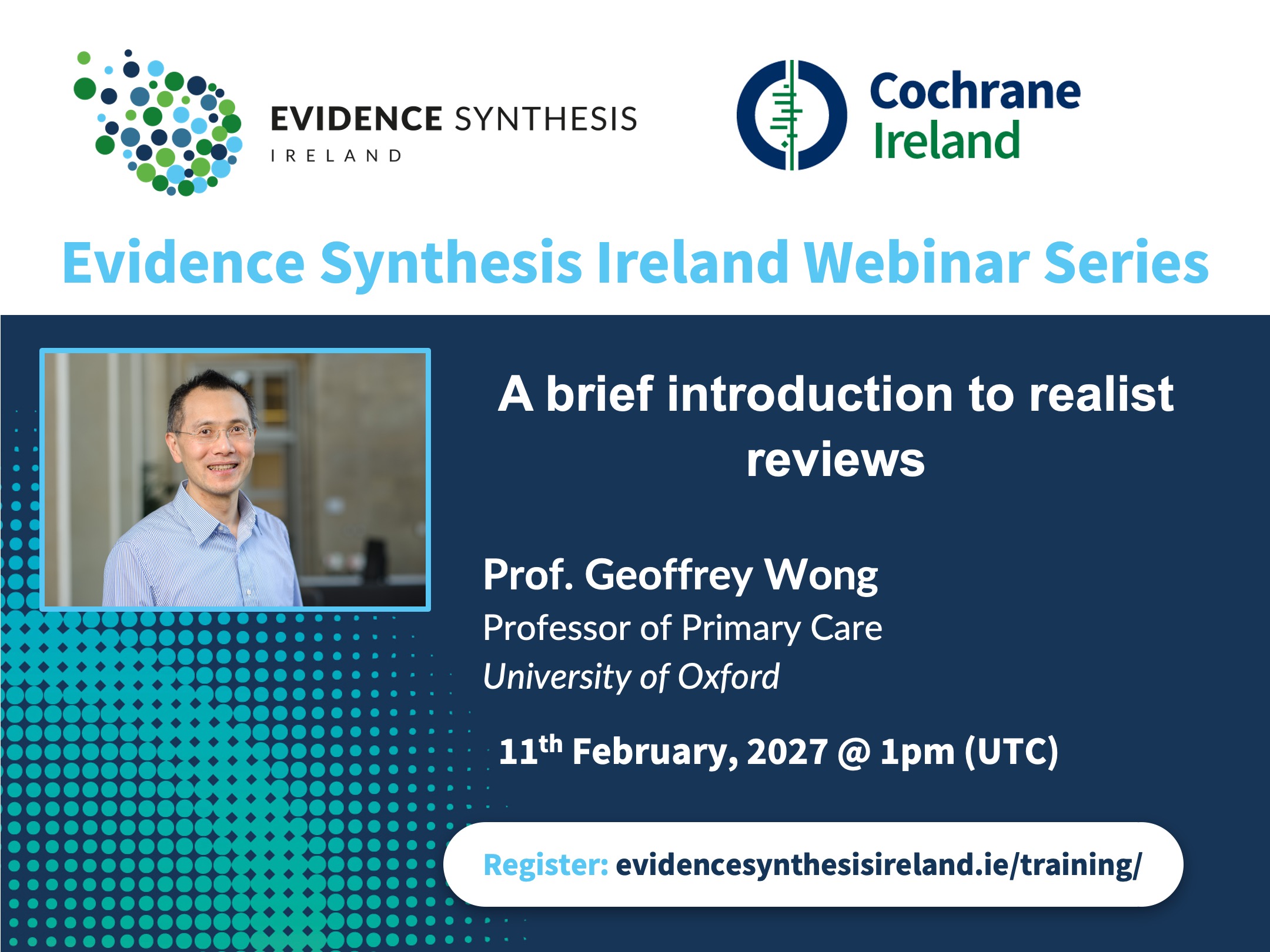
To register, click here This webinar will provide attendees with a brief introduction to realist reviews (also known as realist syntheses). During the webinar we will
To register, click here
This webinar will provide attendees with a brief introduction to realist reviews (also known as realist syntheses). During the webinar we will cover what a realist review is and when it might be useful. Importantly, the webinar will cover the underpinning realist ontology that realist reviews are based on. It will also explain the concepts of generative causation, mechanisms, contexts, outcomes, programme theory and middle-range theories – understanding these being essential for any budding realist reviewer. The slides from the webinar will be made available later, and contain examples of realist reviews and further reading for those who wish to learn more about realist reviews.
Speaker:
Geoff Wong is Professor of Primary Care in the Nuffield Department of Primary Care Health Sciences at the University of Oxford. He is an internationally and nationally recognised expert in realist review and evaluation. He has extensive expertise in conducting and providing methodological support for both approaches as well in their methodological development. He led the two UK National Institute of Health Research funded projects that developed quality and reporting standards, and training materials for realist reviews and realist evaluations (www.ramesesproject.org). He works part time as a GP in the NHS in London.
more
(Thursday) 1:00 pm - 2:00 am
To register, click here Background Health care policy and practice decisions should be based on a synthesis of the global body of evidence rather than relying on
To register, click here
Background
Health care policy and practice decisions should be based on a synthesis of the global body of evidence rather than relying on individual studies. Evidence Synthesis Ireland promotes evidence based healthcare policy and practice by supporting high quality, relevant systematic reviews including the synthesis of qualitative evidence.
Aim
This workshop provides authors, with an interest in learning more about the QES process, with a comprehensive overview of the approaches to and the methods for qualitative evidence synthesis. It offers an insight to the development of a protocol, introducing participants to, search methods, selecting studies, assessing the quality of studies, data extraction and approaches to synthesis.
Learning Outcomes
In this course, participants will be enabled to:
• Understand the basic principles of a qualitative evidence synthesis
• Identify the purpose and scope of a QES
• Understand search methods and apply these methods to a search strategy
• Discuss the criteria for selecting studies
• Assess the quality of studies
• Discuss the principles involved in extracting and synthesising findings from a QES
• Identify the process of application of GRADE-CERQual to QES findings
Date: 22nd February 2027
Time: 09:30 – 16:00
Location: The National University of Ireland, 49 Merrion Square East, Dublin 2
Fee: General Admission €100 / Student €50
Places: 25 available for individuals who are resident on the island of Ireland
Skill Level: Introductory
Target Audience: This is an introductory workshop targeted for Healthcare professionals, academics, researchers, decision makers who are interested in learning about the methodology and processes involved in planning and conducting a QES.
Teaching Strategies: The workshop will consist of a mixture of short presentations, led by members of the ESI teaching faculty covering each of the stages of developing a QES, small group activities based around worked examples and exercises and plenary discussions, providing participants with the opportunity to discuss and develop their understanding of the QES process.
Facilitators:
Dr Linda Biesty is an Associate Professor at the School of Nursing, Midwifery & Evidence Science, University of Galway, and Deputy Director of Evidence Synthesis Ireland
Prof. Pauline Meskell is Professor of Research at the University of Limerick, a member of the ESI Executive Management Committee and an ESI Research Associate
*If your type of ticket is sold out, please join the waitlist or contact us at esi@universityofgalway.ie
more
(Monday) 9:30 am - 4:00 pm
The National University of Ireland, 49 Merrion Square, Dublin 2, D02 V583
49 Merrion Square
(Thursday) 1:00 pm - 2:00 pm
To register, click here Background Health economics methods are employed to provide evidence on the cost effectiveness and budget impact of health technologies and health
To register, click here
Background
Health economics methods are employed to provide evidence on the cost effectiveness and budget impact of health technologies and health and social care interventions. This evidence forms part of the multidisciplinary health technology assessment (HTA) process in Ireland and internationally, which is central to informing resource allocation decision-making by policy makers and practitioners within and across health systems. Moreover, given the growth in applied health economic evaluation studies internationally, evidence synthesis methods are increasingly employed to critically appraise and synthesise the health economic evidence base. To this end, there exists a need to educate relevant stakeholders on the conduct of evidence synthesis in the context of health economic evaluation.
Aim
This workshop aims to firstly, provide an introduction to the methods of health economic evaluation, and secondly, to provide guidance on the conduct of systematic reviews of health economic evaluation studies.
Objectives
The objective of this workshop is to equip participants with the knowledge and tools to conduct a systematic review of health economic evaluation evidence.
Learning outcomes
In this course participants will be enabled to:
Dates: 8th April 2027
Time: 10am-3pm
Location: NUI, Merrion Square, Dublin
Prices: General €70; Student €50
Skill Level: Introductory
Target Audience:
Facilitators:
Paddy Gillespie, Professor of Health Economics, Health Economics and Policy Analysis Centre (HEPAC), University of Galway
Paul Carty, Health Economist, GSK
Programme
10.30am-11.30am: Lecture 1: Overview of Health Economic Evaluation Methods
12.00pm-1.30pm: Lecture 2: Conducting Systematic Reviews of Health Economic Evaluation Studies
2.00pm-2.30pm: Participant Feedback Session: Guidance to Participants on Systematic Reviews of Health Economic Evaluation Projects
more
(Thursday) 10:00 am - 3:00 pm
The National University of Ireland, 49 Merrion Square, Dublin 2, D02 V583
49 Merrion Square
To register, click here Date: 29th April 2027 Time: 09:30 – 15:30 Location: University College Dublin Skill level: Intermediate Places: 30 Target audience: Academics, researchers, librarians, information specialists, decision makers, and
To register, click here
Date: 29th April 2027
Time: 09:30 – 15:30
Location: University College Dublin
Skill level: Intermediate
Places: 30
Target audience: Academics, researchers, librarians, information specialists, decision makers, and Evidence Synthesis Ireland fellows who would like to learn more about realist synthesis. Participants should have some basic understanding of realist synthesis. This will not be an introductory session, but will go more in-depth on concepts and principles of data extraction and theory refinement.
Prerequisites: Prior training and/or some basic knowledge of realist synthesis.
Background
Realist synthesis is an increasingly utilised approach to evidence synthesis, particularly within health and social policy research, where understanding why and for whom interventions work is as important as whether they work. Whilst introductory training can equip researchers with a foundational understanding of the realist approach, developing the methodological rigour required to conduct high-quality realist reviews demands deeper engagement with the more complex, iterative elements. This workshop builds directly on prior introductory training and responds to a recognised need for intermediate-level development opportunities that address the practical and epistemological challenges of data extraction, CMOC (generative causation) construction, and programme theory refinement. It is designed for researchers and academics who are ready to move beyond foundational principles and strengthen their capacity to conduct and critically appraise realist synthesis to a high methodological standard.
Aim
The aim of this workshop is to deepen participants’ understanding and practical competence in realist synthesis, with a particular focus on data extraction, the development and refinement of context-mechanism-outcome configurations (CMOCs), and the iterative testing of programme theories.
Objectives
The objectives of this workshop are to:
Learning outcomes
In this course, participants will be enabled to:
Teaching strategies
The workshop will consist of a series of short, focused presentations addressing the realist principles underpinning data extraction, CMOC development, and programme theory refinement within a realist synthesis. Presentations will be interspersed with structured practical sessions in which participants will work directly with real or illustrative data sets to construct and interrogate CMOCs, and to iteratively test programme theories against emerging evidence. Facilitated small group discussion will encourage critical reflection on methodological decisions and trade-offs encountered in practice. There will be dedicated time for questions and expert feedback from realist synthesis specialists. The number of participants will be limited to 30.
Attendees should, if possible, bring their laptops – this may be helpful for the practical sessions, where they can work on their own project.
Facilitators
Dr Brynne Gilmore is Assistant Professor of Health Systems in University College Dublin. Brynne is an applied global health researcher who uses theory driven methodologies to evaluate and improve health programmes. She has been using realist reviews and evaluations for over 10 years and across numerous contexts. She has conducted or contributed to over 10 realist reviews or rapid realist reviews and seven realist evaluations. Brynne has written several realist methodology papers and book chapters, including on data analysis and synthesis, advisory groups and article appraisal. She is currently part of a team developing quality reporting standards for realist reviews, and is an advisor on two large international realist projects. She is a frequent peer reviewer and grant reviewer for realist projects, has supervised PhD students using realist methodologies and has examined realist PhDs.
Dr Tracey McConnell is a Lecturer in Chronic Illness and Palliative Care in the School of Nursing and Midwifery, Queen’s University Belfast. She is also an Honorary Marie Curie Senior Research Fellow. She has been using realist approaches for over 10 years across mental health, palliative care and music therapy research. She currently leads an NIHR funded multi-site UK wide realist evaluation and has successfully completed two NIHR funded realist syntheses supported by Prof Geoff Wong. Tracey has supervised MSc and PhD students using a realist approach and is keen to build a realist support network across the Island of Ireland.
more
(Thursday) 9:30 am - 3:30 pm
To register, click here Data extraction and synthesis are amongst the most methodologically demanding stages of a realist review, requiring researchers to make complex, theoretically informed
To register, click here
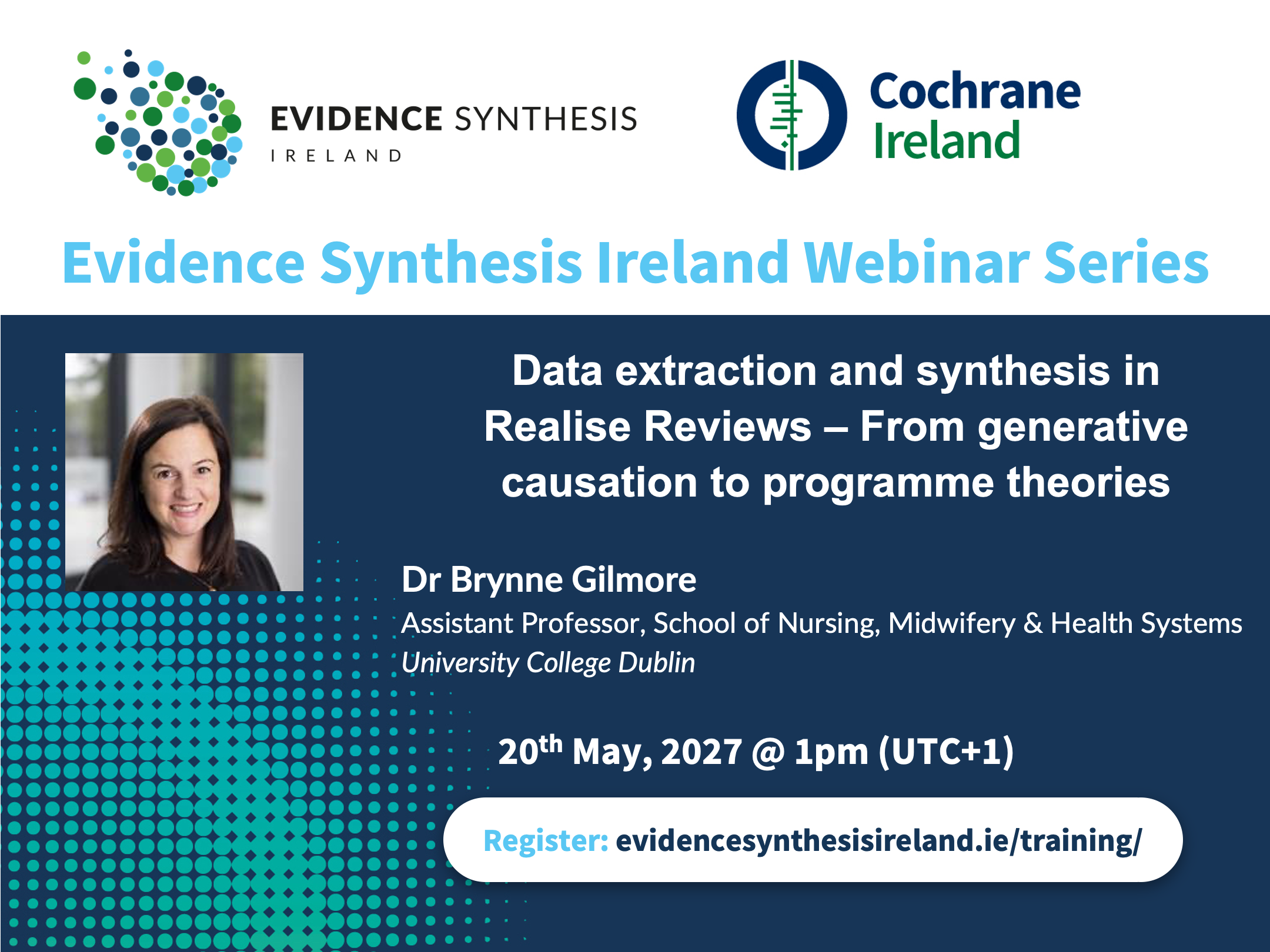
Data extraction and synthesis are amongst the most methodologically demanding stages of a realist review, requiring researchers to make complex, theoretically informed judgements using heterogeneous, and often incomplete, evidence. This one-hour webinar is designed for researchers and academics with an existing foundational knowledge of the realist approach who wish to deepen their understanding of these critical stages. Drawing on established realist methodology and examples, the webinar will explore how to extract evidence of generative causation in the form of CMOCs, and how these CMOCs are subsequently used to refine and test programme theories during the synthesis stage. Through a combination of presentation and worked examples, participants will develop greater confidence and precision in their approach to data extraction and synthesis within realist reviews.
Speaker:
Dr. Brynne Gilmore is Assistant Professor of Health Systems in University College Dublin. Brynne is an applied global health researcher who uses theory-driven methodologies to evaluate and improve health programmes. She has been using realist reviews and evaluations for over 10 years and across numerous contexts. She has conducted or contributed to over 10 realist reviews and rapid realist reviews, and 7 realist evaluations. Brynne has written several realist methodology papers and book chapters, including on data analysis and synthesis, advisory groups and article appraisal. She is currently part of a team developing quality reporting standards for realist reviews, and is an advisor on two large international realist projects. She is a frequent peer reviewer and grant reviewer for realist projects, has supervised PhD students using realist methodologies and has examined realist PhDs.
more
(Thursday) 1:00 pm - 2:00 pm
25mayAll Day27ESI Summer School 2027(All Day) Áras Moyola, University of Galway
The Evidence Synthesis Ireland Summer School 2027 will take place on the 25th, 26th and 27th of May 2027 in Áras Moyola, University of Galway. Further details will be announced
The Evidence Synthesis Ireland Summer School 2027 will take place on the 25th, 26th and 27th of May 2027 in Áras Moyola, University of Galway. Further details will be announced soon.
may 25 (Tuesday) - 27 (Thursday)
Áras Moyola, University of Galway
The innovative ESI Fellowships give Fellows the opportunity to learn about evidence synthesis, with hands-on experience of how to plan, design, conduct and report an evidence synthesis. Fellows are placed virtually with world-class evidence synthesis centres and review teams in Ireland and internationally, on policy and practice relevant reviews.

We’re committed to improving how we gather, interpret, and share vast amounts of information, a process known as evidence synthesis. Our approach isn’t just about conducting research; it’s about improving the very methods we use to plan, conduct, and share the results of this process.
We work in many different research areas relevant to evidence synthesis and have a particularly strong focus on rapid reviews, knowledge translation and “studies within a review” (SWARs).
“ Reporting on health care topics can rely too much on asking experts or reporting the results of a single study…what would be much more useful to members of the public, especially when it comes to making decisions about their own health, is for people to understand how to situate health claims in the global body of evidence. “